Marketing for B2B start-ups – launching your business
14 August 2019
You have your brand, branding, web design, your business cards are at the ready, what next? When you launch your business, it is crucial that you get traction within your target market as soon as possible so that you can start earning. Here are some of the essential actions to take when launching your B2B start-up and that all-important website.
This is the second in the Marketing for B2B start-up series. If you haven’t read it yet have a look at my first blog “Marketing for B2B start-ups – what do you need before you launch?”
Website launch:
Your website is your most important digital asset so getting the launch right should be your focus. Make sure that you find a good web developer to make the design come to life (your graphic designer may have someone they work with). It needs to be responsive (view correctly across all devices). Do not make the mistake of thinking that because you are B2B that customers will not be using mobile devices to look at your website, my target market is industrial and technical B2B companies and about 50% of my traffic is from mobile devices. This is because people have a look while they are on the move, on site, on the shop floor or even use their mobile as another screen while at their desk. If your website is not mobile friendly you will be punished by Google for mobile searches.
Make sure your developer also sets Google Analytics and Google Search Console up for you so that you can monitor these, submits, or shows you how to submit, your sitemap on Google Search Console and links Console to Analytics so that you can see everything on the same dashboard.
If you haven’t already, you need to create relevant, engaging content on your website that your customers will find useful. You need the basics; a home page or introduction, “about” section, your services or products (with an associated transactional section if you are selling online) but you also need to make sure that you have a section that is kept up to date as search engines do not like static sites (e.g. blogs or news).
SEO (Search Engine Optimisation):
SEO is a bit of a science and is always changing but the real basics never change. It is about making sure that the website is relevant, interesting and easy to use for visitors. I will go into more detail about SEO in a later blog, but at this stage you need to make sure that; the website is easy to read on all devices (this isn’t just about the website being responsive), that the content is relevant to your target audience, that you future-proof it with an easy way update it regularly and that there are multiple links back to your site (Google won’t find it at all if there are no links).
Blogs
Many B2B companies use a “News” section to make sure that their website isn’t static but your company news is unlikely to be interesting to your target audiences and limits how much you can post (you are only going to have so much news). Blogs are a better choice because you can make sure you write about things that are of use to potential customers and blogs tend to get more likes and shares. By all means have a News section but I wouldn’t make it a priority when launching.
When you start out it might not be obvious what you need to write about as you haven’t yet had a list of common questions that your customers ask but you can probably have a good guess. Don’t just write about your products/services (that is what your products/service page is for) write useful advice about your area of expertise. For example, if you are in the business of manufacturing additives for the food and beverage industry, you might have knowledge that food scientists would be researching (e.g. the pros and cons of different types of emulsifiers), or you may be an architect and have knowledge that housing developers research (e.g. different methods of construction and when you would chose timber frame over brick and block). Don’t be afraid to include comparisons of products and services you don’t provide, if you establish yourself as the expert, and your information sends the customer somewhere else, they will come back next time and they are more likely to purchase from you in the long term (think of Miracle on 34th Street – it works in real life too).
If you have 4-5 blogs ready to go up when the website goes live, your site will already look more engaging. Don’t forget to date them correctly. If you leave the automatic published date as the date shown it will look like they were all written on the same date.
Social media:
For more detail on social media in B2B, see my previous blog “I’m B2B, do I need to use social media?”. At this point you need to set up your social media accounts and launch your business on them. Your company page should have all of your contact information, most importantly your website, as this will help people find you and will help your Google rankings. You will probably find that for the first few weeks after launching your website that your social media pages rank a lot higher than your own website. Your first post will probably be news of the company launch and the new website. However, remember that social media is ultimately person to person communication. It’s best that your company page is not devoid of posts but, particularly for LinkedIn, blog posts should be shared by the author. The company page can then share the author’s post (with the exception of promoted posts). Also, remember that your website is your most important digital asset and that you want to use social media to get your target audience to visit your website. Wherever possible host content on your website and then post it as a link rather than hosting directly on social media platforms.
Google company page:
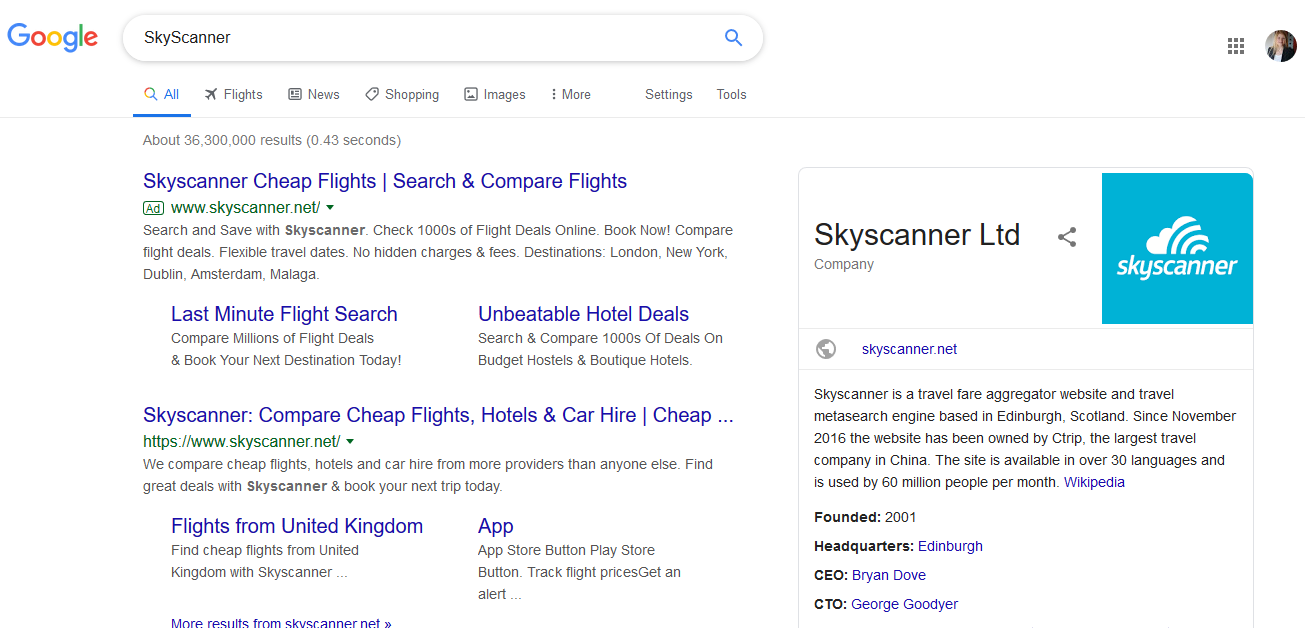
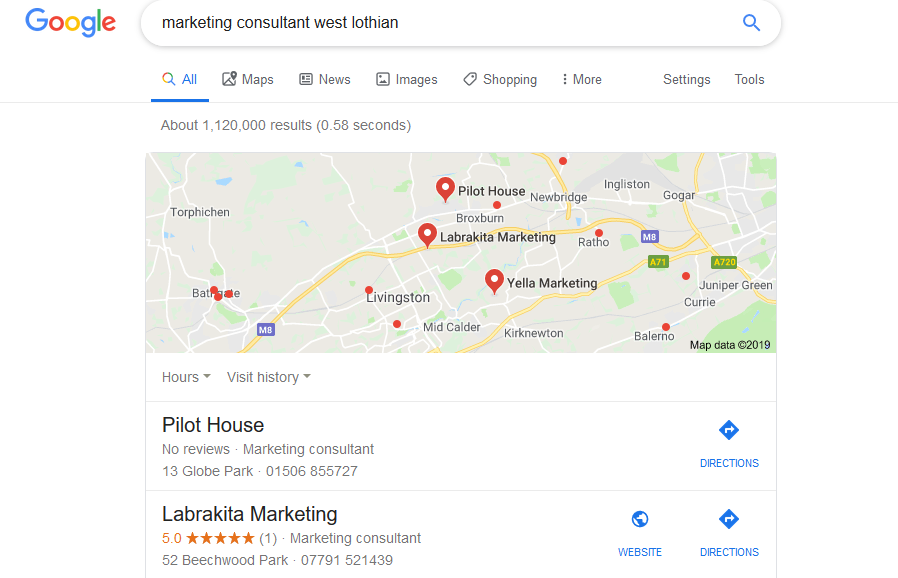
At launch, you should also make sure that you set up a Google company page and add all of your contact details including your website. This will help as a search for your company name will bring up your company information panel on the right-hand side on a desk-top and the top section on a mobile search. It also means that you will come up on the map for geographical searches, for example, if you are a health and safety consultant based in Livingston and someone searches “health and safety west Lothian” you should come up in the list under the map even if your organic results aren’t so great for that search term.
Example of the company information panel on Google (desktop view):
Example google search map (desktop view):
Other links:
Make use of all free directories you have access to. Yell.com offers a free listing, your local authority may also host a local business directory. You may also find other directories in your sector.
PR:
If you are launching an innovative product or service, it is a lot easier to launch with a PR campaign than if you are setting up with a me-too product or service. Unfortunately, most of us sit in the second category and there aren’t many publications that are going to print “New Marketing consultant sets up in West Lothian”. However, if you are bringing something unique to the market, make sure you make use of the press and get your press release out to every local and industry editor you can. I will talk about how to write a press release in more detail in a later blog.
Advertising:
If you are a B2B tech start-up with investor backing then you may have the budget for this (most B2B start-ups won’t). Advertising, whether on or offline, can be a great way to get your brand out there. However, as this is a very expensive type of communication, make sure that you involve a marketing consultant or agency to make sure that you invest in the right media, using the right message.
These days there are many types of advertising and many places to do it. For B2B start-ups TV and radio advertising are unlikely to be worth investing in, nor are billboards (although industry-specific podcasts might if they have a decent audience). However, there are many other options, from Google Ads, to LinkedIn sponsored posts, to industry magazine adverts.
Networking:
No matter what your new business is, having a network to help you get out there is invaluable. Whether it is potential suppliers, people who can refer you, potential customers or even just moral support and advice from those who have been in your shoes, networking is incredibly helpful when you launch.
In the Central Belt of Scotland, where I am based, there are hundreds of networking events. There are dozens in Edinburgh alone. Get recommendations from your existing network as to which ones work for them and experiment a bit. It will take a while to find which ones work well for you. Get to as many as you can soon after launch, once you have a lot of business coming in you won’t have as much time to attend them. If you offer a service networking is a great way to find clients, so grab your business cards and get out there!
Direct Marketing:
Direct marketing is any type of marketing where you are directly contacting a prospect via email, phone or by post. At launch you are unlikely to have many contacts yet, but it might be worth looking at options of how to contact prospects once they start to come through. Make sure that you understand GDPR regulations and know what data you are and are not allowed to collect and how to use it (I’m not an expert on this one but there is a lot of information about it out there). I never advise purchasing lists as they are often inaccurate and most people on the lists have accidentally clicked (or not unclicked) that they are happy to be contacted by third parties when in reality they are not.
Chamber of commerce:
Your local chamber of commerce may be able to offer a lot of help at launch. Some chambers offer 6 months free membership for new start-ups. Even if you do not become a member, their events are often worth a look.
Business Gateway
If, like me, you are based in Scotland make use of Business Gateway. It is the start-up wing of Scottish Enterprise and offers one-to-one support as well as training and workshops across Scotland, not just on marketing but on everything you need to know when setting up a new business.
In the next start-up marketing blog I will cover how to keep the momentum after launch. If you haven’t already, check out my first start-up blog “Marketing for B2B start-ups – what do you need before you launch?”
If you need any more help with marketing your start-up call me on 07791 521439 or email me at samantha@labrakita.co.uk.
Author: Samantha Tonge, Marketing Consultant, Labrakita Marketing