
Interview with Barry Clark: Sales & Marketing – working together
31 March 2021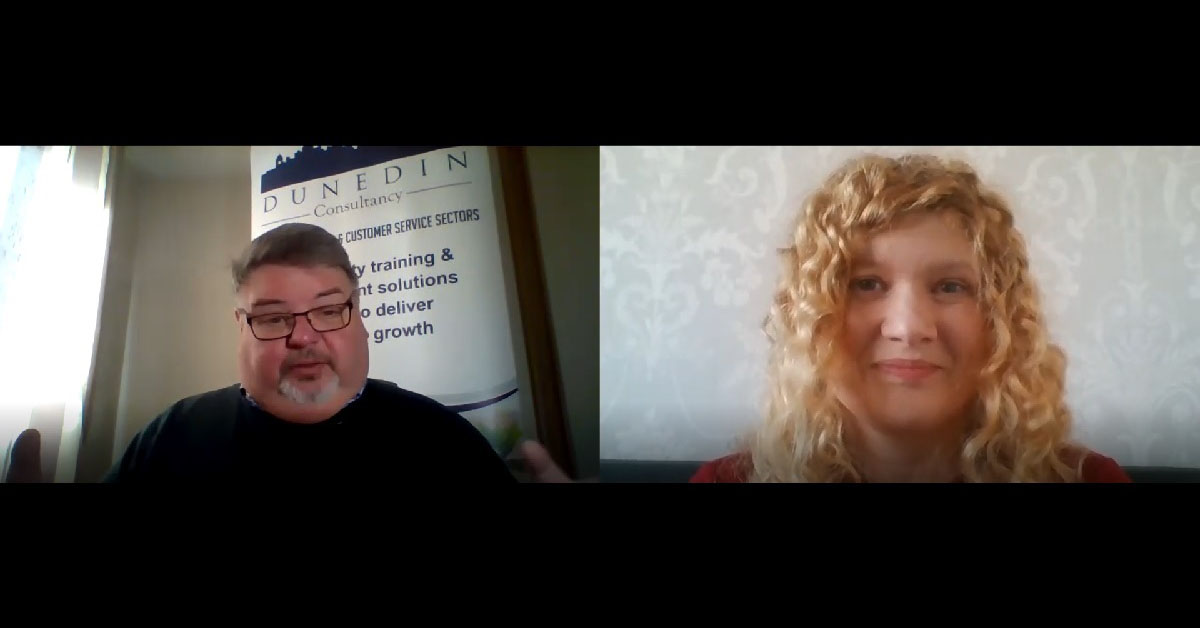
In the third of my video interviews with experts, I spoke to Barry Clark of Dunedin Consultancy. We spoke about whether sales and marketing should be one department, how we can work better together and some amusing examples of how not working closely has made things go horribly wrong.
This is the third in my series of interviews with experts in specific fields of marketing and fields related to marketing. If you missed it, also check out my first interview with Steve Ponton on LinkedIn and my second with Stuart Aitken on graphic design.
Barry’s links:
Barry’s business – Dunedin Consultancy
Barry’s book – “Selling made simple”
Transcript:
Samantha: This is the third in my series of interviews. I'm doing a series of interviews with specialists, primarily within marketing. I'm here with Barry Clark today to talk about how sales and marketing should work together.
A lot of definitions of marketing would include sales as part of marketing. But also, there are quite a few salespeople that say no marketing is part of sales. In either case, I would say that both need to work very close together rather than in silos. So, I thought it would be good to have a chat with Barry who's an expert in the sales field, and even recently written a book on the subject. So Barry, if you'd like to introduce yourself,
Barry: Samantha, thanks very much indeed. I’m very grateful for the invitation to join you here today. My name is Barry Clark, and my business is called Dunedin Consultancy. And I like to describe myself as the Selling Made Simple business coach. I work with individuals and businesses, to help them understand what is stopping them from making enough sales. And more importantly, I share my experience from about 30 years of working in the sales environment, both in B2B and B2C, to help people build a sales culture within their organization, with individuals to help them improve their selling skills, and personally help them build their confidence when having a sales conversation with customers.
And that's all focused to help them achieve the sales success that everybody knows that they should be delivering, which invariably is at a higher level than they are at currently.
I would completely agree with your introductory statement there Samantha. I see so many businesses that lump sales and marketing together. And often within the same person. They will recruit for a sales and marketing manager. I tend to think, well, how much better would it be if you had a marketing expert and a sales expert, working side by side, because my philosophy is that they are two distinctly different, but very similar and very, very intertwined disciplines. You have to get the best out of both and marketing won't succeed without sales working very closely. And vice versa, sales won't succeed without a good strong marketing input behind them as well.
Samantha: I feel very much the same. And I don't know about your experience, but in my experience a lot of businesses keep them in separate silos and as a result they don't get them working together as, as they should, in order to get the best out of both worlds. Have you found that to be the case?
Barry: Oh indeed I have yes, probably more often than not would be my answer to that Samantha, what I'll tend to see, particularly with the businesses that approach me for help, advice and support, what I'll tend to see is that if they do have separate marketing and sales resources, they're not working closely together. And an awful lot of the businesses that I help, I find it's a bit of a silo mentality, because they're not achieving the level of success that they want to be. It's always easier to blame someone else, rather than to look inward and take responsibility and ownership and say, “you know what I could be doing better than I am”. And I think for sales, marketing is an easy target and for marketing, sales is an easy target.
For me, that comes down ultimately, to the senior leadership within any organization is they should be inspiring and motivating and resourcing both areas to get the best outcome. So often, I'm often approached by frustrated marketers, who will come to me and say “I just don't get it, you know, my client has engaged me. The product delivers exactly what the clients are looking for, we've done a really good marketing campaign to lift the profile and so the customer really understands it, we've generated all these fantastic leads for the organization and then nothing's happened and the clients screaming at us because they've not achieved the sales”. Here's the key thing; there's been a great marketing campaign, but the work hasn't then been done to convert the outputs of the marketing campaign into sales. And that's where the two really come together.
Samantha: Yes, I’ve found it's frustrating if you generate leads, really hot leads that need to be chased up straightaway, and they just sit there. Conversely, I've also had heard from marketers who blame sales when they don't understand how important profit is at the end of day, the whole point of what they're doing is to make sales not just to get click through rates and all these other figures. Those are important, but that then they need to move that to the next stage in sales.
So, from a sales point of view, what would you like to see from marketing departments and agencies?
Barry: I think the key outputs that the sales function needs starts at the beginning. Have they got the right product, have they got a product that the market actually wants, that the market is going to get excited about? And will spend money to invest in? Does the market understand what the product is going to do for them?
There are some fairly famous stories out there, where you just wonder what had gone on within the product development department within the marketing department. I'm thinking of things like the infamous Coca Cola changing its recipe. Who in their right mind, thought, that's a great idea? We've got this fantastic product, let's change it. Let's change it and give them give the market something different. Who in their right mind thought of that?
So, what the sales department needs from marketing is, properly researched products, something that the market is genuinely going to get excited about. The right level of meaningful, workable, marketing, promotional material, whether that be brochures, whether today it’s websites, whether it's working with social media, I think that's often where the disconnect becomes apparent. You may have a brochure that sets unrealistic expectations or makes promises that the sales department can't fulfil.
Equally. Sales, salespeople can be notoriously bad for making promises that the product can't fulfil. And that those are the real-life examples I see when the sales function and the marketing function are not talking to each other. They're not sitting next to each other and they're not, dare I say it, spending time with each other.
One of the most powerful exercises I've seen is when the marketeers join the sales force in the field, and vice versa, when the sales force are joining the marketers to really understand what the customers are telling sales and the feedback coming through marketing. Sometimes that’s how it becomes apparent why customers are expecting the product to do X, but actually, it's meant to be doing Y instead.
Because ultimately salespeople will be driven to get the sale -not always at a profitable level they, they are often volume incentivized. Rather than just thinking “we need to sell X volume”, they should be thinking “we need to sell x volume at y price to make this profitable”. And, to me, the root cause of those challenges tends to be poor, ineffective communication between the two. And I don't particularly blame the marketers or the salespeople for that. I will challenge and hold accountable the senior leadership to say, why have you got these two functions working against each other rather than in harmony?
Samantha: Yes, and it's sometimes from hoe management incentivise. I was in a role once where the sales target did not align with marketing targets, and therefore sales weren't incentivised to follow up marketing leads.
Barry: You've just made me think of a great example of a great example of sales and marketing not working together from during my 30 years of working in the hotel and leisure industry. A particular hotel company that I shan't name and shame (I'm talking about 20, 25 years ago) had a habit of sending out promotional material from head office “we've got this great event calendar for the year, we'll send you a box of promotional material from Wimbledon”. Now at the time, I was running a hotel in deepest Essex in the middle of an industrial estate. We were a Monday to Friday busy hotel with businesspeople in and out, not a leisure resort type place whatsoever. So, sending me banners and bunting and posters for strawberries and cream promotions for Wimbledon, a couple of days before Wimbledon starts. What good is that?
What were we going to get out of that investment in promotional material? And then of course, I was iin operational management meetings afterwards where they would say “you didn't do anything with the Wimbledon promotional material”. Okay. What did you expect me to do in the middle of an industrial estate in Essex, two days before Wimbledon, when you send me a lot of bumf? And let's be honest, that's what it was, bumf.
Why not ask me what kind of promotional activity I could be doing in my marketplace? And let me help to shape and steer the promotional support? Prime example. What I like to call the tail wagging the dog.
Samantha: I've seen similar things as well, where at an international level, they've got this idea of what should be pushed out, but on the ground, it's a different story. Back in the day, I'd spend days on the road with the sales guys. I'd also call them about the products head office wanted to push. “What are your views? What's feedback from customers?” That kind of thing. It’s important to communicate both ways.
Barry: Absolutely. I'm a great believer that communication isn't communication unless it's flowing in both directions. Otherwise, it's just someone else telling me. And if there's no backflow of communication to say, okay, “great idea, but I'm not sure that's going to work for me and my business unit in my location. What if we could do something like this instead?” That's how you get effective marketing campaigns.
Funnily enough there was a new advert for haggis on TV last night. Macsween's haggis. I've never seen them advertised on TV before. And when I saw the advert, I thought, well, that's quite cheesy. stereotypically Scottish. It was tartan accordion, music and all the rest of it. And then I was thinking about it afterwards, and thinking, that TV advert was very effective. Because I noticed it, I remembered it, I remember what the product is, it's immediately got me thinking, “Oh, it'll be Burns Night in a couple of weeks. Yeah. And I am likely to go and buy haggis”. And it's probably one of the only two or three times in a year when I will go out to buy a haggis. But the funny thing was, my partner turned round to me and said, “what's other people going to think about that outside of Scotland”, and my immediate thought was, I do hope that adverts not being aired in England, and I very much doubt it will be. But they got me thinking about it. That's quite a clever campaign. And here I am 24 hours later talking about it to you. So, it's worked.
Samantha: I've been speaking to Sky about TV ads. Traditionally TV advertising is not something you consider in B2B because it's too expensive to reach your audience. It's not targeted and the right people won't necessarily see it. But they're so clever now, especially with cable and sky, where they can play different adverts to different people down the box, they can get really targeted. Marketing is very much about getting the right message to the right person who's going to make that purchase. But then there's that brand awareness that you're talking about which advertising is often more about the longer-term brand awareness. It's amazing how much you can do on TV for a much smaller budget these days so it's interesting that you noticed that.
Barry: Yeah, it was. It was fascinating, and it's when I thought about it afterwards. My immediate reaction was Oh, that's a bit cheesy and chintzy. But actually, it's quite clever and There's another really good example at the moment. A lot of us in business tend to try and stay away from controversy. But sometimes creating a bit of controversy can be really good for market awareness. Just look at the impact that the cream egg advert's having at the moment with the two guys. You know, we live in a very open minded, liberal multicultural society these days, references to same sex couples are all around about us. But just look at the impact and the coverage, because it's Cadbury's creme egg. Oh, my word. But I think it's fantastic. I think it's brilliant. Starting a bit of controversy, but not taking it too far.
Samantha: It really depends on the brand as well. Paddy Power, for example really gets away with it. And they know just how far to take it.
Barry: Very true.
Samantha: And it gets them a lot of publicity, including a lot of free publicity. So sometimes it works. But then again, we all remember, Ratner and his jewellery.
Barry: Indeed, yes, indeed. And I guess, you know, that's, that comes back to the old adage of just listen to that internal voice, sometimes. The Gerald Ratner example is a really good story to just remind people of when to stop and when not to go any further. You know, whenever Gerald Ratner gets mentioned, I'm reminded of a chap that I used to work with many years ago in hotel operations. He had a northwest English accent and had that kind of cheeky Chappie personality, he could get away with saying stuff to customers that I just couldn't say. Because I've got a different accent and a different personality, I would never get away with some of the things that he could get away with customers. And sometimes I'd say, you know what, you go and talk to them, because you'll get away with it. I'll probably get punched where you'll get away with it.
Samantha: And doing these things is also harnessing people's emotions. Cadbury's is particularly good at that. For example, the gorilla advert. It said very little. But the ROI (return on investment) from that advert was incredible. Just because the way it harnessed people's emotions and associated Cadbury milk with a really happy feeling.
Barry: And we're still talking about that commercial, what is it, 10, 15 years after it was run. Absolute piece of genius. You look at some o other brands, I mean, Irn Brew, can get away with things in adverts that nobody else would ever get away with. I think now, because of the history, we expect an Irn Brew advert to be a bit edgy, to be controversial, to shock. But it’s expected, and it’s what we're looking for from it. And very rarely do they disappoint.
Samantha: And do you think that's something that marketing should work with sales on as well? Getting across how emotion important in getting the sale? And printed materials that really helped them do that?
Barry: Absolutely. That's largely how my business has developed over the last few years. There are a lot of cases where there is a skills gap within the sales world. Life society, what our customers expect from us, has moved on a lot. And that pace of change is rapid.
I'll be honest, I do meet a lot of people in the sales world, particularly those who've been doing it for quite some time, that use sales techniques that we used to employ in the 90s and the naughties. They're not appropriate anymore. Society's moved on and expect different things. I see a lot of people who are still stuck in that “features and benefits” type of selling. Every textbook that was out in the 1980s and 90s was all about “features and benefits” of your product and you know what, nobody cares today. Nobody cares about features and benefits. They just want to know “I need this doing. This is the problem I've got, oh your product is going to solve it for me”. In that B2C environment, it's aspirational, it's which of the emotions are you appealing to. You're going to make somebody more healthy, more wealthy, you're appealing to their ego and making them feel better than they did before. So the old features and benefits, the shiny suited, character, you know, the typical double glazing, second hand car salesman, still quite a lot of them around I have to say.
Samantha: And to be fair, there are a lot of people in marketing, especially B2B, that do that as well. And focusing on features over benefits as well, benefits should definitely become before features. And like you say, people don't care, they want to know how it's going to help them. And sometimes the emotion you've got to hit is fear. So, for example, in the world of maintenance, is their plant going to going to shut down? Are they producing enough stuff, etc.? I think a lot of marketers in B2B think it's completely different from B2C. It's not, it's the same principles. People wear a different hat,when they're at work, they have different concerns, it's different emotions. It's not likely to be just joyous.
Barry: No. But I would say that the differences are quite subtle. Ultimately, we're all people. One of the key errors that the sales function often overlooks is that, whether it's an SME, whether it's a big blue-chip conglomerate, you're not selling to the organization, you're actually selling to the personality that's right in front of you and is talking to you.
Samantha: Yes, their KPIs (key performance indicators) might give you clue. That's not the whole story, those are probably going to affect the purchaser’s decision making.
Barry: Ultimately, the procurement person who's in front of you, if you rub them up the wrong way, if they just don't like your personality, if you haven't built any rapport and built a connection with that individual, you're not going to get the sale. It's not going to happen. You could have the best products in the world, you could offer them the most competitive price in the world. But if you've not built any rapport and connection with the individual, chances are you're not going to get the sale.
Samantha: I think that's where it comes back to communications. Because the sales guys will be the ones finding out what the common thread that's coming up with customers, and who can therefore let marketing know so the marketing materials can reflect that. With one campaign I was involved in, the original materials provided were all about maintaining production. But that wasn’t the actual problem on the ground. The target customers weren't purchasing because they didn't feel they had time to sort it out. They were too busy firefighting. So, after speaking to sales guys on the ground, we completely changed the materials to be about how it would save them time. That was the hook. And it was all about “are you wasting man hours”, a completely different message. It solved both issues, but we were focusing on the wrong problem.
Barry: A great example of that - a friend and colleague of mine on the networking circuit, who works as works as a business support specialist. Her sales message to people in the networking circuit is “pass me the £10 an hour jobs so that you can focus on the £1,000 an hour jobs”. I think that's a fantastic message. So many of us get bogged down on a day-to-day basis with the important, but small things that eat up lots of time. And I think the same the same can be said in industry with bigger businesses. It's so often you get distracted, and you get bogged down in the routine and the monotonous day to day tasks. And it takes your focus away from the big high earning opportunities. Now, if your product comes along and will smooth out all of those important but mundane tasks and let the personnel within the business focus on the big money earning the big profitable tasks. Why wouldn't you invest? Why wouldn't you come on board?
Samantha: Absolutely. It saves you money in the long run.
Barry: Anyone listening to this interview If you're in any doubt, the “features and benefits” approach to marketing and selling from the 1980s and the 1990s, it is redundant, it's gone. And what is the main reason that it's gone? Because we all carry these things around with us (holds up phone). You know, I was talking to a colleague recently who is a fellow trainer and business coach, he specializes in the automotive world. And he was he was telling me how the selling process in car sales has completely changed in the last few years. And the reason is smartphones, because of access to the internet. In days of old, you know, 10 years ago, if you were buying a new car, you'd walk into a showroom, and the salesman would latch on to you. And we'd go through all the features and benefits of the particular car, you're looking at "Oh look at this, it's got Sat Nav, and it's got a sunroof, and it's got four doors." Nobody cares. And he was telling me recently, they just don't do that anymore. Their whole questioning and qualification process has now evolved into a clarification process. Because the customer walking in the door probably knows more about the car they're interested in than the salesman does. They’ve done their research at home. So, the whole process has changed – all they need to do is just answer any queries to reassure the customer and to confirm the base knowledge that they’ve already got. Then they'll help the customer make the purchase.
Samantha: And that's another point, whilst marketing material shouldn't lead with features and benefits, all that technical information, especially something technical, like a car, or any machinery, the full technical spec should be available, but it's getting it in front of the customer at the right stage in the sales process.
Barry: Absolutely.
Samantha: And too many people lead with that.
Barry: Oh you're so right there, Samantha, you know, going back into my old world of into the hotel and events industry. I spent many years working in the wedding industry, right in the thick of it. And the way that the wedding industry promotes and sells its products, has completely changed in the last 10 to 15 years. In the mid 90s, early noughties, we would expect anyone that was coming to our venue to have a look at the wedding facilities, we would be one of probably 10 or 12 venues that they would be going looking at. It was features driven then. And it was about basic things such as capacity, menu options. It's all online these days. And research has shown recently within the last three or four years, wedding couples are now visiting two, maximum three venues. Because they've done all the research and filtering at home. So, the marketing process needs to be completely different, because people are looking for that raw information to be accessible. But they don't want that up front. They don't want it right in their face.
Samantha: I think that's also where marketing automation comes in. I don't know if you're familiar with that at all, where you how you can start to qualify leads within the website, depending on their behaviour, if you know if you know who they are, if they've responded to an email or signed up for something, that can really help sales as well.
Another thought, I have another question: in your experience do salespeople get to be involved enough in things like rebranding?
Barry: Interesting question. My take on it is that no, they're not involved nearly enough. Why do I say that? If you think of most of the clients that you're working with, just now Samantha the businesses that you've worked with in the past, who is actually spending most time talking to your end user to your customer? Is it the operations people? Is it the logistics people? Is it the marketing people? Or is it the salespeople? Who's actually talking to them?
It's the salespeople. Yet how often do the salespeople actually get consulted in terms of looking at upgrading the product or rebranding. How often is the sales force consulted? And equally, how often do the salesforce understand the importance of contributing?
I'll be the first to tell you. Many people, many consultants, like myself will look at look at teams within a business and say that the salesforce is isolated. And I will go as far as to say, a lot of the time the sales force cause that isolation, they tend the like to be very protectionist. “That's my clients, you're not talking to them”., and “you're not going to steal my clients off me”. They're not always very good at looking at the bigger picture. And I always really encourage sales teams, particularly the leaders within the sales team, to play their part in the bigger picture.
It's your salespeople that spend far more time talking to your customers. It's salespeople who are most likely to hear the grumbles and the groans when something isn't quite right, it doesn't quite fit doesn't quite do what they thought it was going to do. But salespeople can be very guilty of pushing that aside, because they're sales “we’re not aftercare, we're not customer care, we're not maintenance, we are sales, I just want the next sale”. But how much more difficult is it going to become to get that next sale? If the product isn't delivering everything that the customer expected of it?
Samantha: I think that there's two elements to that. They have information you don't have that would be really useful to know. The same with other departments - customer services in particular. They have information that will help you put together a brand proposition correctly.
Also, if you get them involved it, they understand that marketing isn't just doing pretty pictures, we're not the brochure department. It’s actually really important, and brand in particular, is so important. And they need to understand what the brand they're representing is. I always try and get as much involvement as possible in the brand proposition stage, you get that, that buy-in, and you get all that extra information.
Barry: And that's why I think it's so important for senior leaders, if you're seeing those barriers between your sales force and your marketing team, your operations team, you've got to break those barriers down. Each team has its own purpose, they are each individually part of the jigsaw of the bigger picture of the organization. It’s so important to break those silos down. Because each discipline, each area is interdependent upon the other.
There's no point in the sales force making a sale, winning a contract, if operations can't deliver it. And then marketing don't understand what the customer is really using the product for and why it appeals to them. I know it seems quite cliched, but interdisciplinary team meetings, the annual conferences, the away days, the get togethers, back in the old face to face world when we did such things. Which, joking aside, is all the more important now, when we're in this constrained to an online world, that all of these disciplines, keep in touch with each other and keep sharing for the common goal, because you just take one of those pieces of the jigsaw away and it will impact all the others as well.
As somebody wearing the sales hat here. I know how much sales teams can be so protective and poor communicators, because a lot of it comes down to the way that they are led and in terms of the culture within the organization, that also often sales are kind of set up on this pedestal. “They bring in all the revenue, they're really important people”. Okay? Yes, they do. But they can't do that without marketing behind them. They can't do it without operations, they can't do it without logistics of actually taking the product off the shelf and boxing it up and sticking it on the delivery lorry. None of it functions in isolation.
I counsel and guide the salespeople that I work with, that they need to be much more integrated with the rest of the organization and share that feedback. If the customer has got moans and groans, because the product isn't quite doing what they wanted to do, they're in the ideal position to feed that back to marketing, to feed it back to the exec level and say, “this is the feedback we're getting out in the field. Customers are expecting this, but it's not what the product meant to do”. Well, maybe not. But it's what the customers think it's going to do for them. So, we've got a disconnect here.
Samantha: So, if someone in a marketing department client-side is watching this video, who doesn’t have that leadership have that leadership support, who wants to work with sales better, are there things that you recommend that they can take it upon themselves to do to improve that relationship and improve that performance?
Barry: Absolutely. I mean, of course they could they could engage with you. And with me, Samantha, and together will absolutely overcome those issues. Without a doubt. However, in terms of the "what could I actually do here and now today?", I think the most valuable thing that you can do, is to spend some time with the salespeople, and equally get them to come and spend some time with you, within the marketing department.
Whilst we started this interview with me saying that in my opinion they're two separate disciplines. Yes, they are. I firmly believe they're two separate areas of expertise, but they're very closely intertwined. One can't function without the other. And the first thing that anybody watching this could do tomorrow, is open your arms, send an invitation, even if it's just one of your sales team, and say, “Hey, I'd love to come and spend the day with you. Can I just come and spend a day in your shoes to see what goes on in your life. And hey, as we're doing that, as we're maybe, you know, doing some calls with clients, or we're going out to see somebody, you might be able to share with me what you encounter on a day-to-day basis”.
And then when you've done that, reciprocate, get them to come and spend a day with you in your department and let them see from your side. One of the one of the most successful organizations I've worked for over the years, had a really strong culture of, they called it, “back to the floor”. And once a year, the senior execs, the MD the Operations Director and such would spend a day on the floor in the hotel. Now, I believe it could have worked better, because there was a bit of a culture there of "Oh Nick, the MD is coming here next week, get the paintbrush out and get this" the only the only way you can really see what's going on. And having gone from being that kind of departmental manager to being the exec level to being at the director level, you do become detached from the front end of the business you with the best will in the world, you know, you don't know the minute detail of what's happening on the shop floor. But you can do if you make the effort as the leader to go and find out.
The best example of this is a guy that I worked for at Travel Inn brought the concept of back to the floor from his time at Butlins. And he actually did a TV show, you know, he did the episode back to the floor, where he went to a Butlins camp and worked as a cleaner and a housekeeper for the week. The fact that he arrived by helicopter on the first day, I think, kind of gave away the fact that somebody special was coming. And I could never quite reconcile the two together, that he went to do a back to the floor for a week but he arrived by helicopter
Samantha: That's showing some real disconnect.
Barry: Well, yeah, read into that what you will. I don't think there's many linen porters at Butlins that come to work by helicopter. But the principle if you can integrate yourself in your business and In a way that you're getting the genuine approach, then you can really see what's going on. It's hugely powerful, it is invaluable.
Samantha: And in very large organizations, that's probably almost easier because people probably don't have a clue who the top bosses are.
Barry: Well, that probably speaks volumes, when I worked for one of the bigger hotel companies, we had the rogues gallery, at the back door, you know, this is the MD's picture, this is the Operation Director's picture, and I won't beat around the bush, you know, HR would flower it up there, you know, this was for integration, and you know, who your colleagues are. Was it hell, it was, “if you see this person you tell me and you let me know. If you see this person sitting in the bar, you come in to tell me”, you know, I can speak speaks for itself, why do we have that?
Samantha: They need to be aware of what the real situation is.
Barry: Absolutely. My last employed job where I was running a £ multi-million business, I had 150 people employed under me. And part of my daily routine is that I would walk around and spend half an hour to an hour, just having that quick chat with as many people within the business as I could find. “How you get in on? What's going on?” And because I did that on a regular basis, I wasn't the, big, bad boss, you can't talk to him. If something was bugging you, in the workplace, if I'm expecting you to clean 20 Hotel bedrooms today, and you don't have a working vacuum cleaner. Tell me about it, I want to know, because you can't do your job. And believe you me, I'll find 150 quid to buy you the vacuum cleaner, so that you can clean 20 bedrooms. But so often senior leaders get isolated, get removed from these kind of things, because middle managers think they don't want to know and they're going to get into trouble about it.
I do want to know, and this exactly the same goes for the marketing and the sales function. It isn't about apportioning blame, but if the sales team are finding it's really difficult to try and support the new marketing campaign that's been put together, you've got to feed that back. Now sometimes it can be a bit painful, but you've got to feed it back. Because believe you me deep down, the marketing department would rather know, this isn't quite working.
Samantha: Absolutely. The quicker you can change it when necessary. And that's so important. When I do marketing plans and campaign plans. The last, well I say the last step, it's really a circle, the last step is control, or checking what's working, what isn't working, and change if necessary. It's so important.
Barry: Very similar to myself to my own work, Samantha, you know, plan, implement, review, make amendments, make changes and adjustments.
Samantha: Yeah, very similar. So, I think my message to sales guys as well is, yeah, please let us know. If you've got any issues, let us know.
Barry: That's the beauty of that kind of “ back to the floor”, or even just, "can I come and spend half a day or spend a couple hours with you", you know, "can I come on a sales call with you, I'd love to, I'd love to experience the challenges that you actually have". And that could be that the sales team is targeted on doing 10 calls in a day. And actually, they've got to drive for an hour to get there, they've got to find change in the pocket. First they've got to find somewhere to get parked. When they do get parked they then got to think, "oh, have I got change for the meter?". And so often, the others within the operation can overlook and just not understand those challenges that are going on.
Samantha: Yes, and I have to say certainly from a marketing perspective, I've learned a lot from spending a day or so with different sales guys. Different markets and different products that they sell. Also quite often at tradeshows, marketing set it all up and then just send the sales guys. It's so important for someone in marketing to be there to a) make sure all that it will run smoothly and b) they really understand those challenges and really understand how it all works.
Barry: Now, you've touched on a bit of a bugbear of mine there Samantha because I see, particularly back in the in the hospitality world, I see hotels and leisure companies spending time, money resource effort being represented at trade shows. And then they do nothing with it.
Samantha: Oh my word – yes!
Barry: It is such a bugbear of mine. A couple of years ago at one of the big Scottish wedding industry trade shows in Glasgow. I went along as a consumer but doing a bit of doing a bit of research for my own business. Of 24 wedding venues that were represented at that exhibition 21 of them I spoke to, because three of them didn't even engage with me. So, they've spent £1,000s to be at a trade show. And I've gone to speak to them, and they don't engage with me. Why? What's going on? 21 that I did speak to, guess how many actually followed up the inquiry that I made with them?
Samantha: Did any?
Barry: Two out of 21. For the first one, it took them a week. And the second one, it took them another 10 days after that to follow up my inquiries and almost three weeks for inquiry.
Half of them wouldn't have been able to follow up the inquiry because they didn't take any details from me, "Oh, GDPR. We can't take any details off you."
Samantha: That's not how GDPR works!
Barry: I'm at a trade exhibition, I'm wanting to talk to you. And half of the places that I went to "oh GDPR. We can't take your details". So, they're expecting me as a consumer to contact them after I've already contacted them at the tradeshow? Why does that happen? Because after the trade show, they've got a whole host of leads to follow up on. But the people who've been at the exhibition who are probably also the salespeople, they've been out of the office for two or three days at the exhibition. They've got two or three days of work to catch up on when they go back. Dealing with the inquiries from the tradeshow isn't the priority.
Samantha: Which is, again, where marketing and sales should work together. There was one place I worked for where when I started they would come back with a bunch of leads, give them to marketing to put on system two weeks later and not have time to follow up anyway. Then we introduced a proper process. So, the leads went on system on the day because there was someone from marketing there, they all had their iPads. It all went on the system and customers received an email immediately with any literature they'd requested.
And it wasn't just the guys on the stand that were expected to follow up. There are people out in the field who could deal with it immediately. And I would recommend to anyone in marketing watching this, please do get involved in these events.
Barry: That's the bit of the process that's also overlooked. It's great. We've spent tens of £1000s being at this exhibition and having a big swanky stand. We've met all these new potential customers, we've gathered some raw data. Now, what are we going to do with it? Who's going to do that? How are we going to sift the raw data that we've collected? How are we going to prioritize that and speak to the people who actually are genuinely interested in in our products and doing business with us? And , you know it's then making that decision of well, how much of that sits with the marketing department? At what point do we pass it on to the sales team? And then what are the sales team going to do with it once we pass it on to them?
Samantha: And having management check on follow up as well. Where are the leads? What's happened with them, etc? I think it runs much more smoothly if you have management who incentivize it correctly, as well.
Barry: Who incentivize it, who get involved with it, and who take ownership. And it's not about being dictatorial, and being highly directive, but it is about asking those accountability questions on a frequent basis of where are we at, what have we done with this with this data? What are we doing with it? Have we got some obstacles and barriers in the way? What do we need to do? How do we need to get around these obstacles?
Samantha: Prioritising those leads as well, because some of them were really hot leads. I imagine a wedding or something like a wedding venue or wedding exhibition that's going to be mostly hot leads because people are there for reason. In my field, it would be varying degrees. But as long as you have a system to categorize them.
Barry: Exactly. Absolutely, absolutely.
Samantha: Okay, so brilliant. Thank you for all that information and discussion. Do You Do you have anything that you'd like to Plug before we move on.
Barry: Well, let me since you mentioned it since you mentioned it allow me to shamelessly plug my new book "Selling Made Simple". You've heard us talking for the last 40 minutes or so about, about my experiences, about my stories. I've distilled my 30 years of experience in, in b2b and b2c selling into what is the first of two books. The second one is on its way shortly, book one is very much about helping those who feel uncomfortable with the selling process, those that that as a colleague described, the reluctant salespeople, the ones that are not really the salesperson but I need to be the salesperson. "Selling Made Simple" will really help open your mind to how to overcome some of those fears. And to get you feeling much more confident about talking to your customers and doing business together.
Samantha: Brilliant. Please do speak to Barry. He's brilliant.
Barry: I'd be delighted to have a chat. Samantha Thanks again for the opportunity to spend today with you. It's been a real pleasure.
Samantha: Thank you very much. Right Bye, everyone.
If you need any help with your marketing, call me on 07791 521439 or email me at samantha@labrakita.co.uk
If you need help with sales, contact Barry on 07857 255556 or here, or buy his book "Selling Made Simple".